Reducing Rood Waste through AI-Powered Recipe App
ROLE
Product Designer
Front-end Developer
TIMELINE
June–Sept 2025
TEAM
1 Project Manager
5 Developers
SKILLA
0-1 Product Design
Reducing food waste through AI-powered ingredient recognition.
A mobile app that recognizes ingredients using AI and recommends recipes based on what's already in your fridge.
OVERVIEW
College students face a unique cooking problem.
College students often juggle busy schedules, limited budgets, and shared living spaces, making it difficult to keep track of ingredients before they expire. Existing recipe apps assume users already know what they want to cook, while inventory apps require tedious manual tracking.
The Core Problem
College students often forget what ingredients they already have, leading to unnecessary food waste and extra grocery purchases. Existing solutions either require tedious manual tracking or assume users already know what they want to cook.
Design Question
How might we help college students make better use of the ingredients they already have while reducing food waste and simplifying meal planning?
Design Goals
Reduce food waste
Simplify ingredient tracking
Personalize recipe discovery
Encourage long-term engagement
RESEARCH & INSIGHTS
Understanding the Problem Space
To better understand the problem space, we analyzed existing recipe and inventory management apps along with research on food waste among college students. This helped us identify opportunities where AI could reduce friction in meal planning.
From our research and competitive analysis, we identified four opportunities.
Reduce manual tracking
Recommend meals from existing ingredients
Simplify meal planning
Encourage repeat engagement
We identified two core product experiences:
AI Ingredient Scanner
Automatically recognize ingredients from a photo to eliminate manual inventory management.
Personal Recipe Recommendations
Recommend recipes based on detected ingredients and dietary preferences.
PROCESS
I explored multiple user flows and low-fidelity wireframes to simplify the journey from scanning ingredients to discovering recipes.


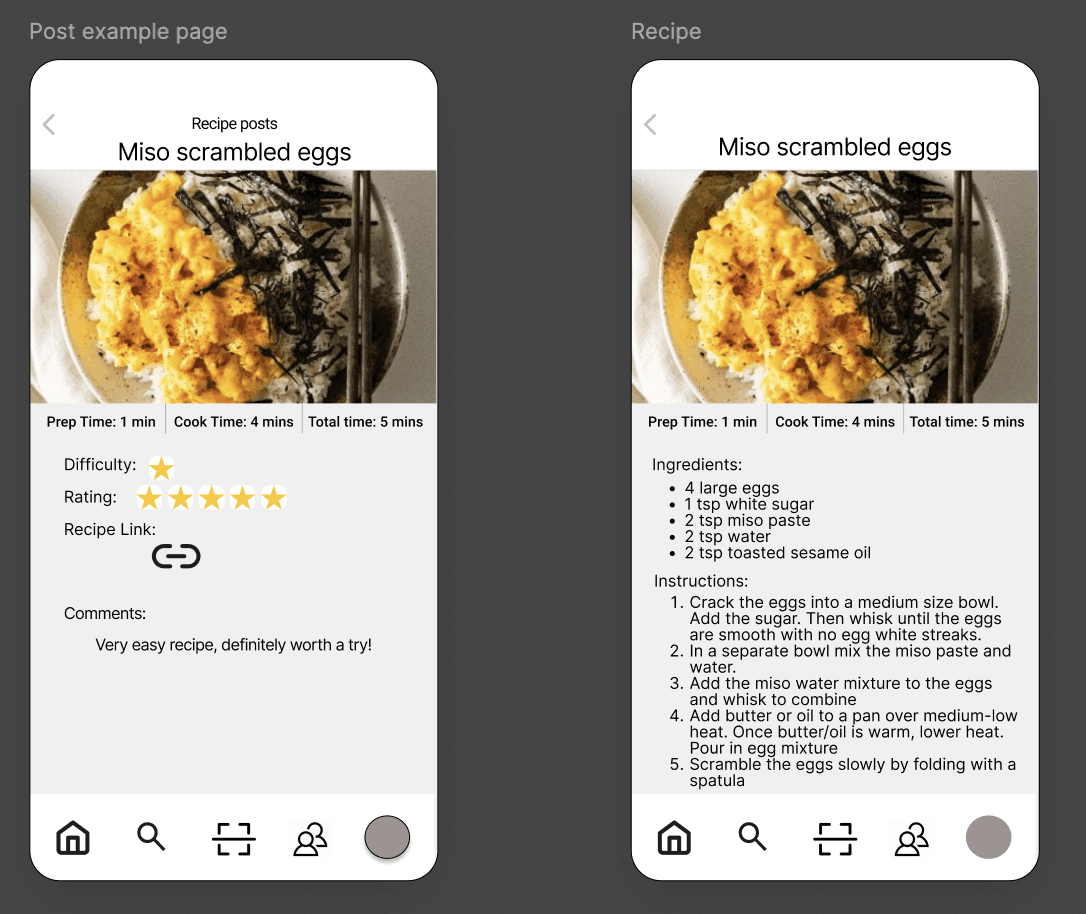
My Process
My role focused on designing the mobile interface, creating user flows, and collaborating closely with developers to translate designs into a functional prototype.
FINAL SOLUTION
Vision Fridge streamlines meal planning into four simple steps.
Scan — Capture a photo of your fridge.
Recognize — AI identifies available ingredients.
Discover — Browse personalized recipe recommendations.
Cook — Save favorites and share recipes with the community.
Interactive Prototype


Design System

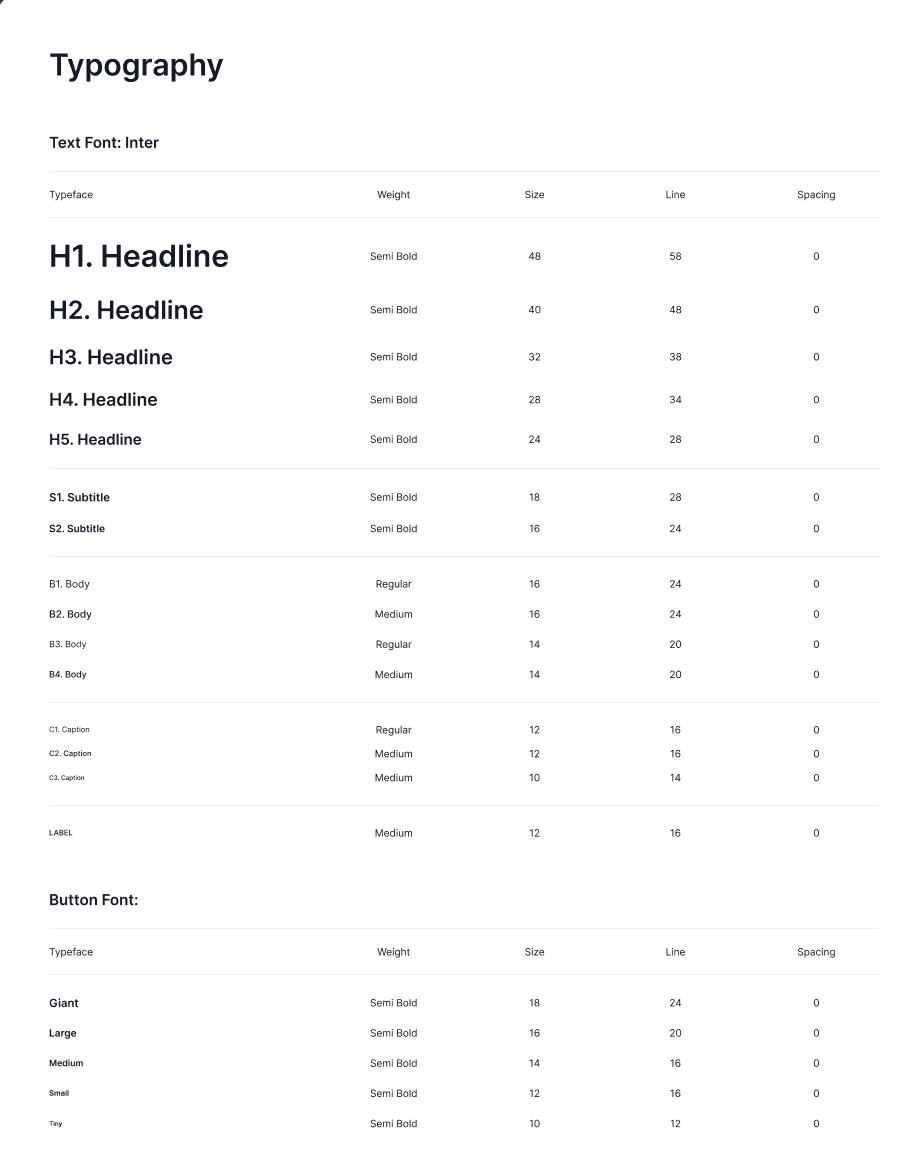
Development
Working alongside five developers required balancing design quality with implementation constraints. I collaborated closely with the engineering team, refined interfaces based on technical feedback, and helped translate designs into a functional front-end prototype.
OUTCOME & REFLECTION
Outcome
Designed an end-to-end mobile experience
Collaborated with a cross-functional team of five developers
Collaborated with developers to deliver a functional front-end prototype.
Explored AI-assisted product design
Strengthened design-to-development collaboration
Reflection
This project strengthened my ability to collaborate with developers and translate AI capabilities into an experience that feels approachable for everyday users.
Continue Exploring
3D Space Design
Modular Women's Shelter Concept
A trauma-informed shelter concept that improves privacy, safety, and accessibility through modular spatial design.
See Case Study